

Marketing is all about persuasion.
Businesses want to present their products in the best possible light to attract attention and boost sales.
But sometimes, this involves more than just highlighting genuine benefits.
In many cases, marketers use vague or misleading language to influence customer choices without making firm promises.
One common tactic used in adverts, packaging, and promotional material is the use of weasel words.
You’ve probably seen phrases like ‘helps improve’, ‘virtually spotless’, or ‘some experts say’ in marketing messages.
They allow brands to make claims that can’t easily be proven false while still appearing truthful.
In this article, we’ll take a close look at what weasel words are, how they are used in marketing, why businesses rely on them, and whether their use is legal.
By the end, you’ll be better equipped to spot these sneaky phrases and make more informed decisions as a consumer – or more ethical choices as a marketer.
What are Weasel Words?
Weasel words are vague, misleading, or indirect phrases used to make statements sound more impressive than they actually are.
They create the illusion of a strong claim without saying anything concrete.
In simple terms, they allow marketers to suggest something without fully committing to it.
The term comes from the idea that a weasel can suck the contents out of an egg, leaving the shell looking whole.
Similarly, weasel words can drain meaning from a sentence while keeping it intact.
They sound convincing at first, but often fall apart under closer inspection.
For example, a product might be described as ‘clinically tested’ or ‘helps improve performance’.
These phrases sound positive but offer no real proof or clear outcome.
Who tested it?
How was it improved?
Without detail, the words remain empty.
Marketers use weasel words to make their products seem better, safer, or more effective, without making claims that could be challenged or proven false.
This tactic is common in industries like health, beauty, food, and cleaning products.
While weasel words are often legal, they can be misleading.
That’s why it’s important for consumers to recognise them and ask questions before trusting what they read or hear in adverts.
How Weasel Words Are Used in Marketing
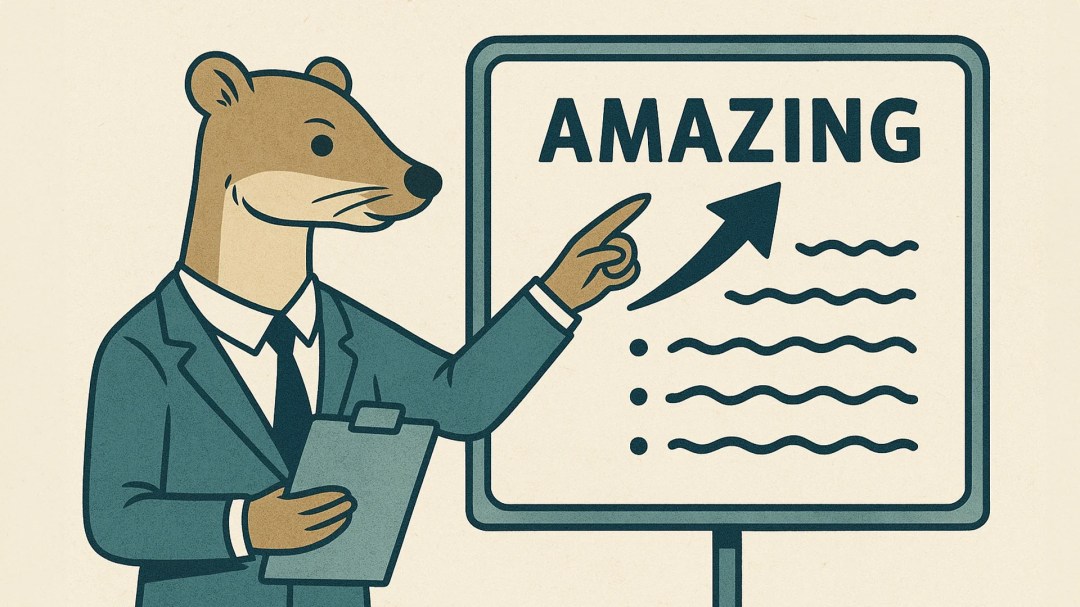
Weasel words are used across nearly every type of marketing.
They help businesses sound convincing while avoiding firm promises.
This makes them popular in adverts, packaging, websites, and product descriptions.
Here are the key ways these words are used to influence buyers.
Creating the Illusion of Benefits
Marketers often use weasel words to suggest a product offers a benefit, without saying it clearly.
For example, a shampoo might ‘help reduce dandruff’ instead of saying it removes dandruff.
This small change allows the brand to suggest a result without guaranteeing it.
If the product doesn’t work, the company can claim it never made a firm promise.
Sounding Scientific Without Proof
Words like ‘clinically tested’, ‘scientifically formulated’, or ‘lab-developed’ are often used to sound smart and trustworthy.
However, these phrases rarely come with details.
Who tested it?
What were the results?
Without this information, such phrases are simply dressed-up weasel words.
Referring to Unnamed Experts
Some adverts say ‘experts agree’ or ‘recommended by professionals’.
These phrases create the impression that the product is supported by authority.
But unless the experts are named and their opinion is explained, these statements mean very little.
Using Comparisons Without Context
Marketers love to use words like ‘harder’, ‘better’, ‘faster’, or ‘stronger’.
These suggest improvement but often leave out what the product is being compared to.
‘Better than before’ or ‘more effective than leading brands’ means nothing without clear, honest comparisons.
Adding Softening Modifiers
Weasel words often include modifiers like ‘virtually’, ’up to’, ‘typically’, or ‘in most cases’.
These weaken the claim while still sounding positive.
Saying a cleaner removes ‘up to 99% of germs’, doesn’t mean it always does.
Appealing to Emotion
Words like ‘trusted’, ‘natural’, ‘pure’, or ‘real’ sound comforting, but they’re often used without proper definition.
These weasel words aim to create a feeling rather than describe a fact.
Common Weasel Words
Weasel words are used to make products sound better, stronger, or more effective than they really are, without making clear or testable claims.
These words are often used in adverts, on product packaging, and in online listings to influence buyers while avoiding direct promises.
The aim is to sound convincing without being specific.
Marketers use them to suggest benefits, create trust, and attract attention without risking legal trouble or customer complaints.
Here are some of the most common weasel words used in marketing:
‘Helps’
This word is widely used in health, beauty, and cleaning products.
Phrases like ‘helps reduce wrinkles’ or ‘helps improve focus’ give the impression that a product delivers results.
But because it says ‘helps’ rather than ‘does’, it avoids any promise and keeps the company safe from blame if results don’t appear.
‘Up to’
This phrase is often used in discounts and performance claims.
‘Saves up to £100’ or ‘removes up to 99.9% of bacteria’ only refers to the best possible outcome.
Most people won’t experience the maximum effect, but the wording still grabs attention.
‘May’ and ‘Can’
These suggest a possible result but don’t promise anything.
Phrases like ‘may support joint health’ or ‘can reduce tiredness’ are vague and non-committal.
‘Clinically proven’ / ‘Scientifically tested’
These phrases sound official but are often used without giving any details about the tests or results.
They sound impressive but may not mean much without context.
‘Experts say’ / ‘Studies show’
These are vague appeals to authority.
Without naming the expert or the study, these claims are difficult to trust or verify.
‘Natural’, ‘Pure’, ‘Real’
These words create emotional appeal but are rarely backed by clear definitions.
There are no strict rules around how or when they can be used.
‘Better’, ‘More’, ‘Faster’
These comparison words are popular but often lack a point of reference.
Better than what?
More than which product?
Without this detail, the words lose real meaning.
The Downsides to Using Weasel Words

While weasel words can be tempting for marketers, they come with clear downsides.
Misleading language may offer short-term gains, but it can damage trust, harm your brand, and even lead to legal trouble.
Loss of Customer Trust
When customers feel misled by vague or exaggerated claims, they’re unlikely to return.
For example, if someone buys a cream that ‘helps reduce wrinkles’ but sees no results, they may feel tricked.
Over time, this erodes trust and damages your brand’s reputation.
Trust is everything in today’s market, where reviews and word of mouth matter.
Poor Customer Satisfaction
Weasel words can create unrealistic expectations.
If the product doesn’t deliver, customers will be disappointed.
This leads to more complaints, refunds, and bad reviews.
In some cases, even though the wording was technically correct, it still leaves a negative impression.
Damage to Brand Image
Brands that rely heavily on vague language may come across as dishonest or untrustworthy.
Modern consumers are more aware of marketing tactics and may avoid companies that don’t communicate clearly.
A reputation for honesty is far more valuable than a clever phrase.
Short-Term Thinking
Using weasel words might boost sales for a while, but it’s not a long-term strategy.
Businesses grow through loyal customers, repeat purchases, and referrals, all of which depend on delivering what you promise.
Are Weasel Words Legal?

Yes, weasel words are generally legal, but they sit in a grey area of advertising.
In the UK, adverts must follow rules set by the Advertising Standards Authority (ASA).
These rules say that adverts must be truthful, not misleading, and backed by evidence.
However, weasel words are often vague enough to avoid breaking these rules directly.
For example, if a product says it ‘helps improve energy’, the company isn’t promising anything specific.
If the customer doesn’t feel more energetic, the business can argue that it only suggested a benefit – not guaranteed it.
Because of this, many companies use weasel words to stay within the law while still sounding persuasive.
That said, the ASA does step in when phrases are too misleading or cannot be supported.
If a claim like ‘clinically proven’ is used, the company must be ready to provide real evidence of a clinical trial.
Without that, the advert may be banned.
So, while weasel words are not always illegal, they must still follow basic advertising standards.
Businesses should use them carefully.
If they go too far, they risk damaging trust, facing complaints, or being forced to change their adverts.
Clear, honest language is always a safer and more ethical choice.
Conclusion
You should now have more of an understanding of weasel works in marketing.
Weasel words are everywhere in marketing.
They’re used to make products sound better, more effective, or more trustworthy, without making any promises that could lead to complaints or legal issues.
From food labels and health products to cleaning sprays and beauty creams, weasel words help brands stay persuasive while keeping their claims vague.
Understanding these words helps you see through the fluff.
Shoppers are more informed than ever.
They value honesty, clarity, and brands that don’t try to mislead.
Using clear, truthful language helps build trust, loyalty, and long-term success.
In the end, words matter.
Whether you’re reading them or writing them, knowing what weasel words are, and how they’re used, gives you an advantage.
It helps you buy smarter, sell more ethically, and cut through the noise of modern marketing.
For more information, or help with all of your marketing needs, get in contact with us at Neon Atlas today.

 Neon Atlas Digital Marketing
Leave a comment