
Buses in the UK are everywhere – in towns and cities, on long routes and short.
Each year there are over 3.5 billion local bus journeys in England alone, so adverts on buses can reach a huge audience.
Buses cover many miles every day and can be on the road up to 18 hours a day, giving people repeated chances to see the same advert.
In this age of smartphones and online ads, it is worth asking: does putting adverts on buses still make sense?
The answer is yes, but with some caveats, as we will explain below.
What is Bus Advertising?
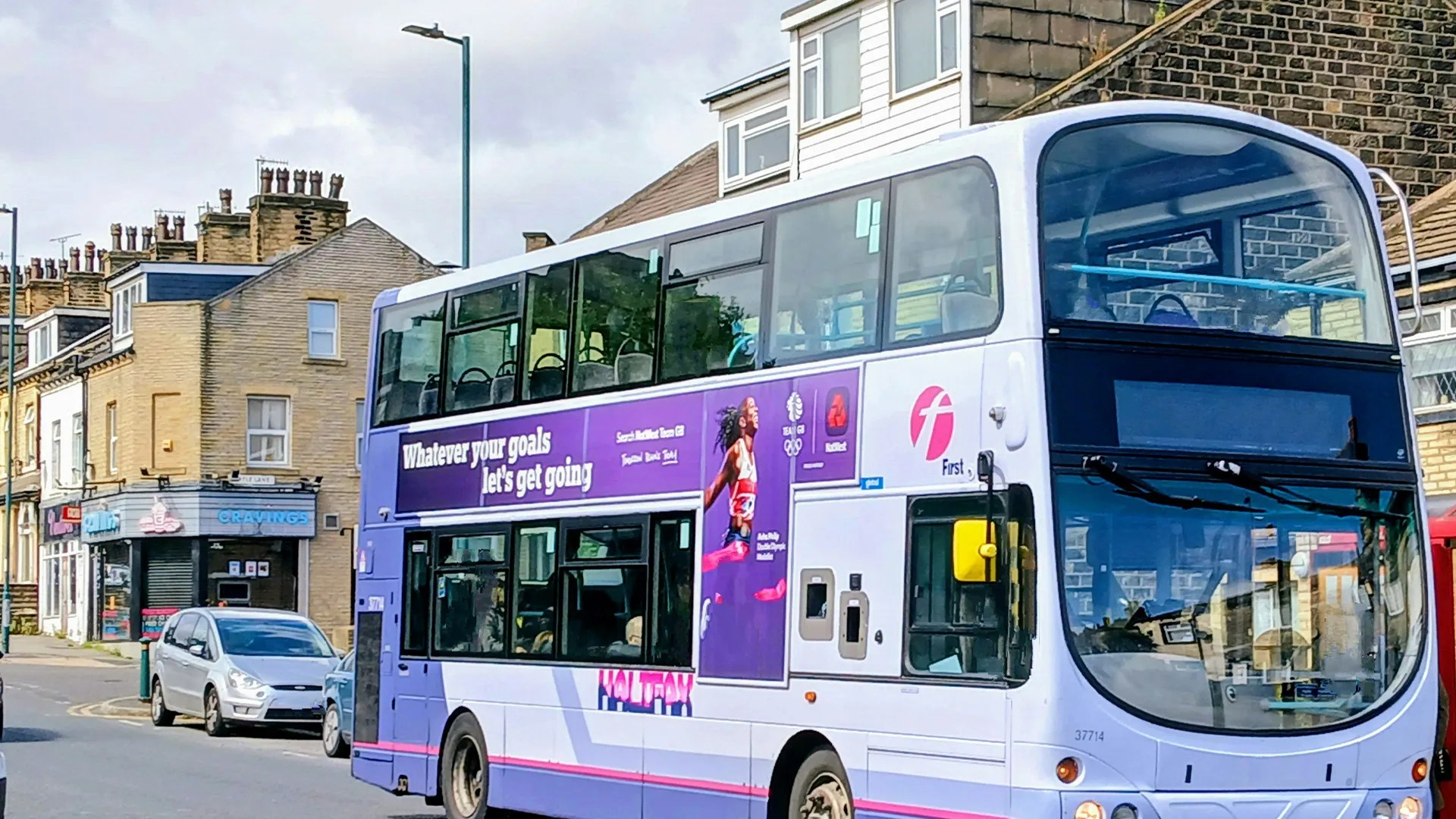
Bus advertising is a form of out-of-home (OOH) ATL marketing that places promotional messages on buses.
This can include posters or full graphics on a bus’s exterior (the sides, rear or even wrapping the whole vehicle) or panels and posters inside the bus (overhead or on seat backs).
In other words, any advert carried by a public bus is bus advertising.
The idea is that commuters, pedestrians and drivers all become a captive audience who encounter your message during daily travel.
By using buses, businesses tap into the high visibility and regular reach of public transport.
Types of Bus Advertising
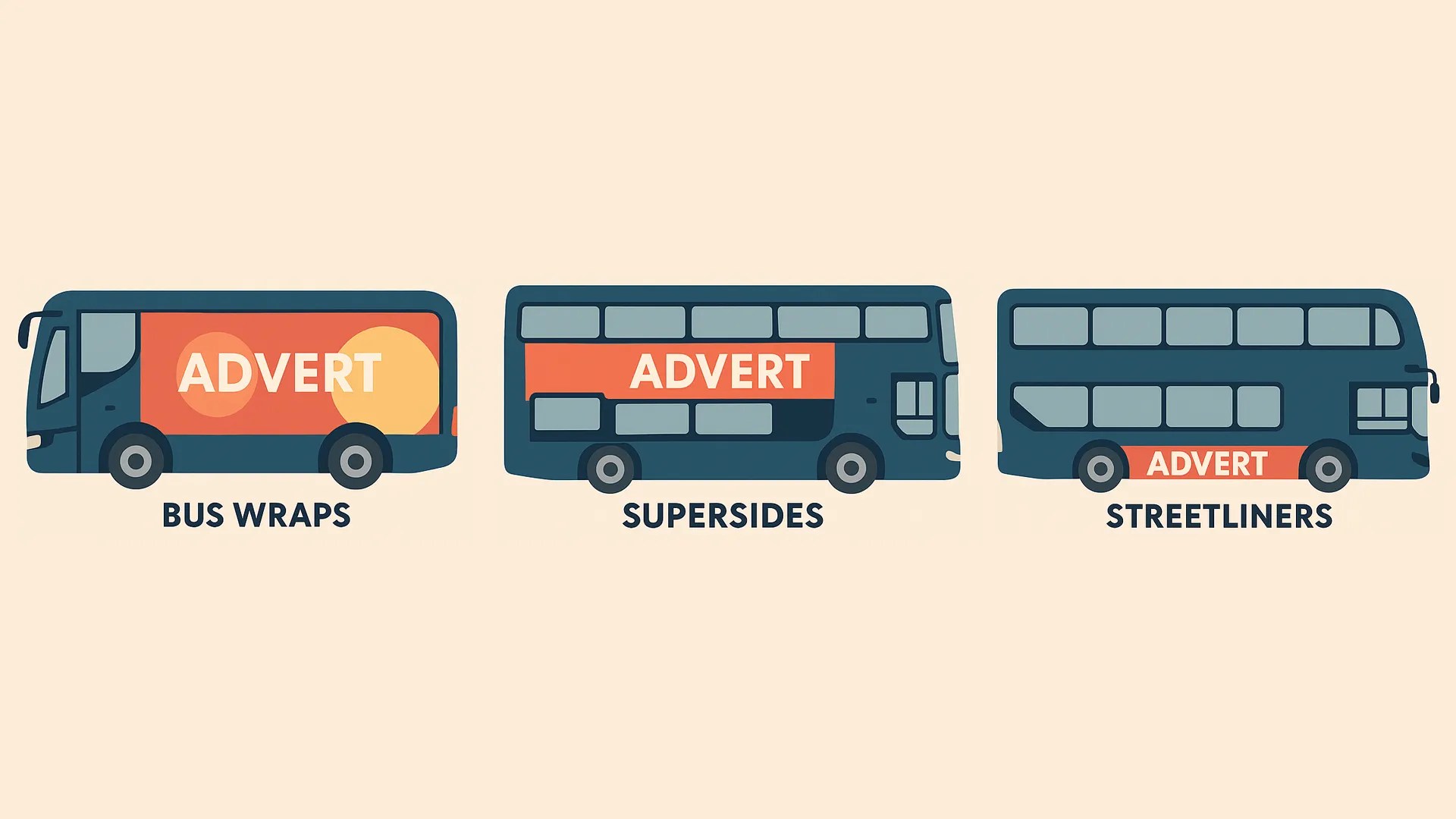
Advertisers have many ways to use buses to spread messages.
Some common formats include:
Bus Wraps
These cover either the entire side or even the whole body of a bus with vinyl graphics.
A full wrap turns the bus itself into a giant moving billboard.
Wraps are very eye-catching and create strong branding because they can use the bus’s full shape to display logos, photos or artwork.
Supersides and T-Sides
These are large posters on the sides of buses.
Supersides are typically 20 feet long on double-decker buses, placed above street level so everyone on the pavement can see them.
T-Sides are premium side panels (including a front section on double-deckers) that ‘cut through’ street clutter to grab attention.
Both formats cover a big part of the bus side and give high visibility.
Rear Advertising
The back of the bus is another prime spot.
A ‘mega rear’ or rear panel can cover the entire bus tailgate.
This targets drivers and traffic behind the bus.
Since motorists often stay behind buses in queues, they see the ad repeatedly.
Streetliners and Other Posters
On single-decker buses, smaller posters (often called Streetliners) can appear at eye level on the bus’s side.
These grab both pedestrians and nearby drivers.
Inside a bus, poster panels above seats or on walls can carry ads to passengers.
These interior panels are great for direct messages or offers, since passengers tend to look at them while sitting.
Digital Screens
Increasingly, buses and bus shelters have electronic displays.
For example, some buses have video screens inside or at bus stops.
These digital ads can rotate messages and even show animations.
They also avoid the problem of traditional posters being hard to see at night.
Digital OOH is a growing trend alongside the classic printed formats.
Bus Shelter Advertising
Many campaigns also include bus shelter advertising.
These are posters or digital boards placed at bus stops.
These ads reach people waiting for a bus as well as passing pedestrians and drivers.
They can be targeted by location.
For example, a cafe might put posters at stops near an office area.
Bus shelter advertising is closely related to bus advertising and often used together for even more exposure.
Is Bus Advertising Still Relevant?

Yes – for many businesses, bus advertising remains a useful part of the marketing mix.
Buses can reach a very wide audience of all ages and backgrounds.
In fact, studies show that most people in the UK live near a bus route.
For example, some industry estimates suggest that 90% of people live within five minutes of a bus route.
That means a huge portion of the population could potentially see a bus ad on their daily commute or walk.
In just one week, as many as 30 million people may see advertising on buses in the UK.
These numbers show that bus ads still have great reach.
A Traditional Twist in a Modern Era
Bus advertising also works nicely in an age of social media and smartphones.
Out-of-home ads provide a physical presence that cannot be ignored, which helps cut through the digital noise of endless online ads.
For example, even younger people (Gen Z) pay attention to large, creative bus ads.
Bus adverts let brands be bold with visuals and colours that stand out on the street.
Buses also serve diverse audiences (commuters, pedestrians and drivers), so a bus campaign can reach different customer groups at once, which is why it is a often missed marketing opportunity.
Finally, bus advertising has become more sophisticated.
New technology (like QR codes on ads) means marketers can track how many people respond.
Digital bus displays can change during the day or interact with passersby.
And sustainability improvements (such as biodegradable wraps) mean bus ads can be more eco-friendly. All these trends help keep bus advertising up-to-date.
5 Bus Advertising Tips
Here are 5 tips for maximising your bus advertising:
Keep Your Message Short and Simple
Viewers usually see a bus ad only for a few seconds as the vehicle passes by.
A common rule is that the slogan or offer should be readable in under 10 seconds.
In practice, this means using about nine words of clear, bold text and including a call to action (such as a website or phone number).
Avoid long sentences or complicated terms.
Focus on one main idea so people grasp it instantly.
Use Eye-catching Design
Because buses move in traffic, your ad needs to grab attention instantly.
Use bright colours, high contrast and big images to stand out.
For example, don’t use colours that blend in with the bus body.
Instead choose a bold palette and clear pictures or graphics.
High-quality photos or illustrations can make people stop and look.
A large logo and simple graphics are also effective.
Pick the Right Location
Plan where your bus ads will travel.
Think about your customers: are they city commuters, students, or shoppers?
Place ads on routes where those people ride.
A university might target routes near campuses, or a theatre might choose buses around a downtown area.
You can also schedule campaigns for specific times (e.g. before a local event or holiday) to make the timing count.
Include a Clear Call to Action
Even on a bus, your ad should tell viewers what to do next.
This might be ‘Visit our website’, ‘Call us today’, or ‘Show this code for a discount’.
Because exposure is brief, make sure the call-to-action text is visible and easy to read.
Include a company logo or name prominently, and a simple directive.
A clear CTA gives your campaign purpose and helps turn eyes on the ad into actual customer actions.
Measure and Optimise Your Campaign
Track how well your bus ads perform.
You might put a QR code on the ad that leads to a special landing page, or ask customers how they heard about you.
If you use multiple buses or routes, compare which ones drive more traffic.
This way, you learn what works (and what doesn’t) and can adjust designs or routes in future campaigns.
Bus Advertising Benefits
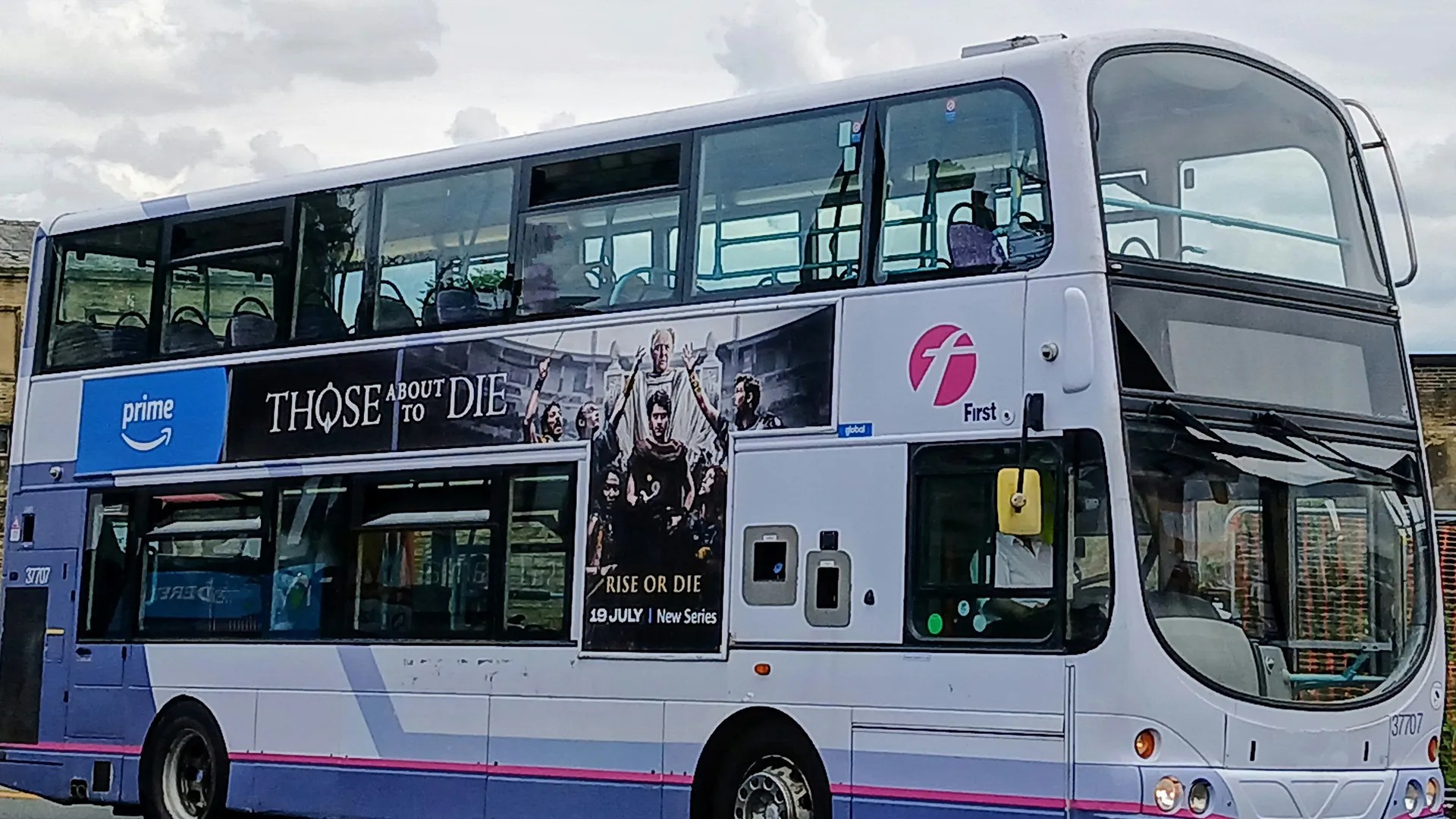
Bus advertising has several major advantages.
Diverse Audience
Buses travel through cities, suburbs and villages, so your ad is seen by commuters, shoppers, drivers and pedestrians.
Because buses are everywhere, they cover many demographic groups (young and old, urban and rural) all at once.
Size and Visibility
A bus is much larger than a car or an online ad.
A full-wrap campaign commands attention.
The sheer size (and being on wheels) means your brand can dominate the street scene and leave a strong visual impression.
Frequency and Repetition
Buses run on schedule and on the same routes every day.
If a commuter or driver passes the same bus or stop repeatedly, they will see the ad multiple times.
This high frequency builds brand awareness.
Repeated exposure is known to improve recall and persuasion.
Targeted Local Reach
Advertisers can choose specific routes or cities for their campaign.
This means you can focus on geographic areas that matter to your business, leading to a great way to do hyperlocal marketing.
A campaign in Manchester will mostly be seen by Mancunians, one in Glasgow by Glaswegians.
This local approach is ideal for shops, events or regional services.
Many clients use bus ads to boost foot traffic in a particular town or neighbourhood, since the ads travel through that exact area.
Cost-effectiveness
Compared to some media, bus advertising can offer a low cost per impression.
Because buses keep running (and ads keep displaying) all day, you reach thousands of eyes without paying per view.
Outdoor campaigns can often be less expensive than TV or radio when judged by total impressions.
Advertising Positively
Since buses are seen as part of the community, some surveys find audiences like seeing ads on them.
In London, a high percentage of commuters said they preferred buses that carry ads (rather than blank buses).
This friendly sentiment can give brands a good vibe.
Bus Advertising Downsides
Despite its strengths, bus advertising has drawbacks.
Limited Audience Targeting
Unlike online ads where you pick exactly who sees your message, bus ads go to everyone along the route.
You can target a city or neighbourhood, but not specific ages or interests.
This broad reach may mean you waste some impressions on people outside your market.
Advertising Clutter
In busy cities, there are lots of posters and billboards on buses, stops and streets.
A single bus may pass many other ads.
If there are too many visual messages around, any one advert may lose impact.
Bus ads can blend into the background unless they really stand out.
Measuring Return on Investment
Unlike click-based online ads, you can’t directly count how many people buy something because of a bus advert.
You have to use indirect metrics (like surveying or special offer codes).
Tracking impressions and conversions is much harder outdoors.
Businesses must be prepared that they might not get precise analytics from a bus campaign.
Short Viewing Time
A moving bus passes in seconds, so people have very little time to absorb the message.
This makes good design crucial.
If the ad is cluttered or text is tiny, viewers won’t catch it.
In practice, only very simple, bold ads work well.
Anything complex or text-heavy risks being missed.
Cost and Operational Considerations
In the UK, renting ad space on a bus has a starting cost (roughly £200–£1000 per bus per four weeks).
For a big campaign this adds up. Small businesses with very tight budgets may find bus ads expensive compared to digital options.
Also, logistics like installing and removing wraps take time, and weather can fade static posters.
Though newer solutions like digital displays help (they’re backlit so viewable at night), classic bus ads rely on daylight and clear weather.
Key Takeaways
Bus advertising is a traditional medium that still has relevance today.
In the UK it offers real-world reach that complements online marketing.
If done well with a concise message, striking visuals and smart placement, bus ads can raise brand awareness and reinforce campaigns.
They work best when integrated into a wider strategy (for example, pairing bus ads with social media or events) to cover all bases.
The evidence shows that people still notice bus ads: many commuters recall them, and many brands find they boost footfall and enquiries.
New technology and greener materials are making bus advertising even more effective and sustainable.
So for UK businesses today, bus advertising remains a viable channel, especially for reaching local audiences and building broad brand recognition.
When used with creativity and planning, it continues to ‘get your business seen’ in a crowded media world.
For more information on bus advertising, or help with any and all of your marketing needs, get in contact with us here at Neon Atlas Digital Marketing today.

 Neon Atlas Digital Marketing
Leave a comment