
Imagine scrolling through your smartwatch after a run and suddenly seeing an ad for a sports drink just when your heart rate is elevated.
This isn’t a coincidence, but an example of presence targeting at work.
Modern marketing increasingly uses real-time signals, like location and even biometric data, to hit the right note with customers.
In simple terms, presence targeting means advertising to people based on where they are and what they are doing right now, rather than just their past interests.
It blends location-based ads (think ‘stores nearby’) with new ideas like adjusting ads to your mood or activity.
This trend is part of a wave of digital marketing innovations driven by big data and smartphones.
The idea is to make messages feel highly relevant, almost as if marketers know your heartbeat.
In this article we will explain what presence targeting is, how it works, give examples, weigh the benefits and risks, and look ahead to the future of this novel approach.
What is Presence Targeting?

Presence targeting refers broadly to reaching customers based on real-time cues about their current context.
One common meaning in digital marketing is simply targeting people who are physically present in a location.
For instance, presence targeting can mean showing ads only to users likely to be in (or regularly visit) a chosen geographic area.
In practice this means you can focus on people now in your town, not just those who once searched about it.
But presence targeting goes beyond geography.
It can also include any signal of a person’s ‘presence’ or state.
For example, data from wearable devices like smartwatches.
Biometric ad targeting is a similar concept: using physiological data (heart rate, facial expressions, voice tone) to infer how a person feels and tailor ads accordingly.
Presence targeting is marketing that reacts to the here-and-now of the user.
How it’s Different to Traditional Marketing
Traditional targeting might send an offer to a region or demographic and hope for interest.
However, presence targeting tries to serve messages exactly when the consumer is physically or emotionally ‘present’ and receptive.
Location-based marketing (also called hyperlocal marketing) is a good example.
It uses GPS or Wi-Fi to hit shoppers in a certain city or even on the street outside your shop.
But now marketers are also talking about your biometric presence.
This is essentially ‘marketing your heartbeat’.
With more devices tracking our body signals, ads could one day appear when a person is excited, stressed, or otherwise engaged.
How Does Presence Targeting Work?
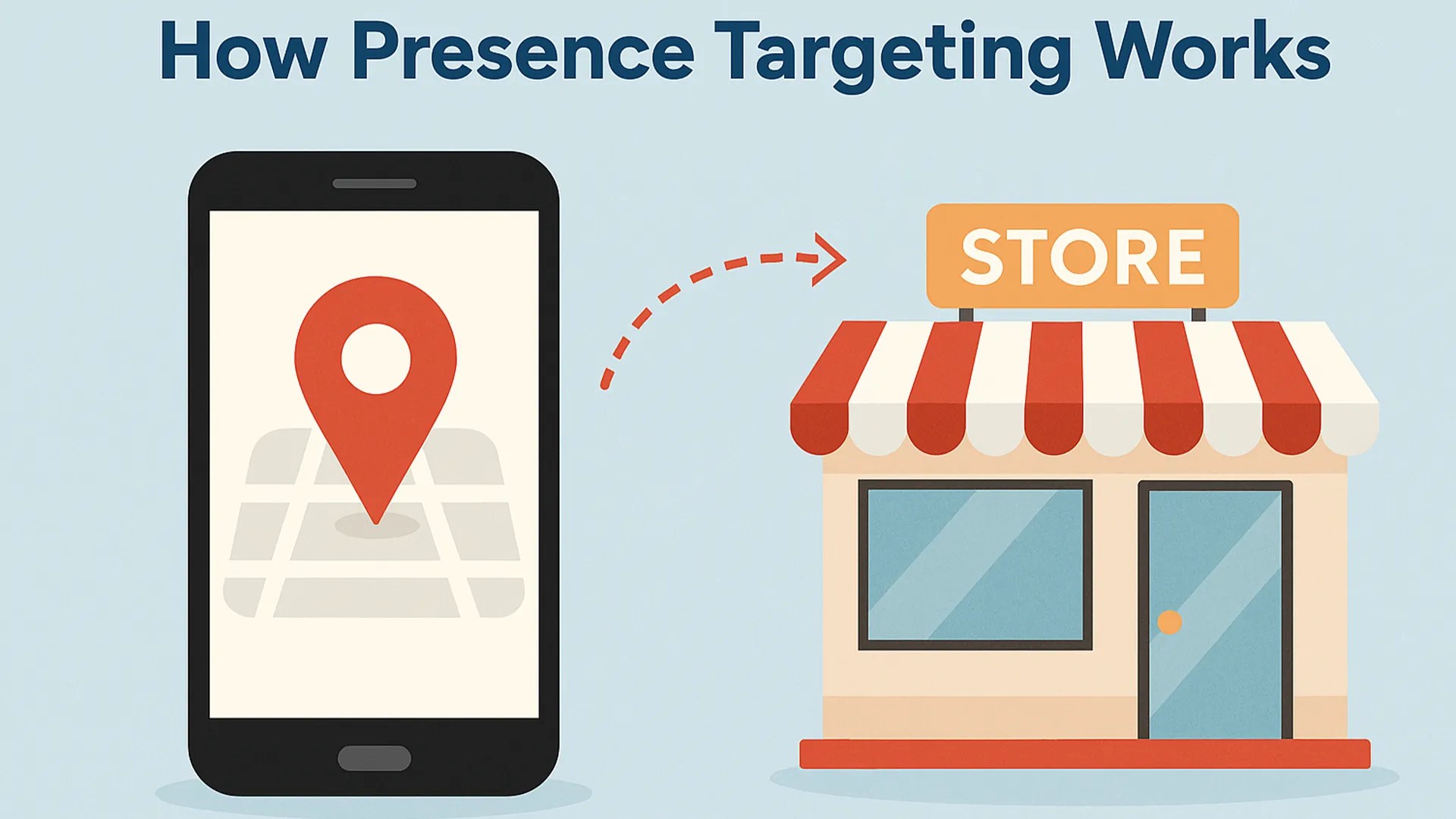
Presence targeting works by collecting real-time data about the customer and using it to trigger tailored marketing.
Location
For location-based cues, systems use signals like GPS coordinates, Wi-Fi, Bluetooth beacons or even cell towers to know where a smartphone is.
For example, a retailer can set up a geofence (a virtual perimeter) around an area.
When a user’s phone crosses into that zone, the ad platform notes the location.
So if a user recently visited a gym, an ad network might later show them promotions for sports apparel when they pass near a relevant store.
Biometrics
On the biometric side, wearable devices and sensors gather data about the person’s physical state.
Smartwatches and fitness trackers can monitor heart rate, skin temperature, movement and other metrics.
Voice assistants or smartphone apps can analyse tone of voice or speech patterns.
Even cameras can read facial expressions or eye movements.
All these inputs are fed into the system as raw data.
AI & Machine Learning
Once the data is collected, advanced software (often AI/machine learning) analyses it in real time.
The system looks for patterns that indicate the user’s current mood or situation.
For instance, a surge in heart rate combined with rapid speech might be interpreted as excitement or stress.
A frown or narrowed eyes could signal confusion or frustration.
By comparing multiple cues, the platform infers a context – ‘This person is exercising’ or ‘This person is anxious’ or ‘This person has just finished lunch’.
Ad Delivery
Finally, the ad delivery engine uses those insights to select and serve the most relevant message.
If the system detects that the user’s heart rate is high and they just finished a run, it might push an ad for a sports drink or protein bar.
If facial tracking shows tired eyes, a sleep mask or relaxation app might be suggested.
Or if someone enters a mall zone and their past shopping habits are known, a nearby store might push a discount alert.
Marketing messages are triggered by the person’s current ‘presence’ data.
By tying ad content to the person’s immediate context, presence targeting aims to feel more intuitive and engaging.
Presence Targeting Examples
Some examples of presence targeting are:
Geo-fencing and Geo-conquesting
Large retailers use virtual perimeters (geo-fences) around stores to send deals to people nearby.
These tactics focus on ‘stealing’ customers from nearby locations by serving ads when shoppers are physically in a competitor’s area.
Proximity Push Notifications
Some businesses use Bluetooth or Wi-Fi beacons in or around their own premises.
When a customer’s smartphone comes within, say, 100 metres of the store, a targeted push notification or text offer is sent.
This leverages precise location.
It targets only those right at the store’s doorstep (or parking lot) with time-sensitive offers.
Location-based Personalised Offers
Apps like Foursquare or other platforms allow personalised alerts based on where a person is at that moment.
For instance, a restaurant might send lunch specials via an app to workers who are detected to be nearby during noon.
Or a clothes shop might automatically text a discount to a loyal customer walking past in the morning.
Biometric Data Experiments
At Wimbledon, Jaguar had fans wear sensor-equipped wristbands to record heart rate variability, motion and skin temperature as they watched tennis.
Analysts used those biometrics to infer excitement during close points and displayed this data on an interactive ad screen.
Another example is at the Cannes Festival, attendees wore smartwatches so a media agency could map their engagement over several days.
In theory, such data could make marketing messages match the audience’s mood.
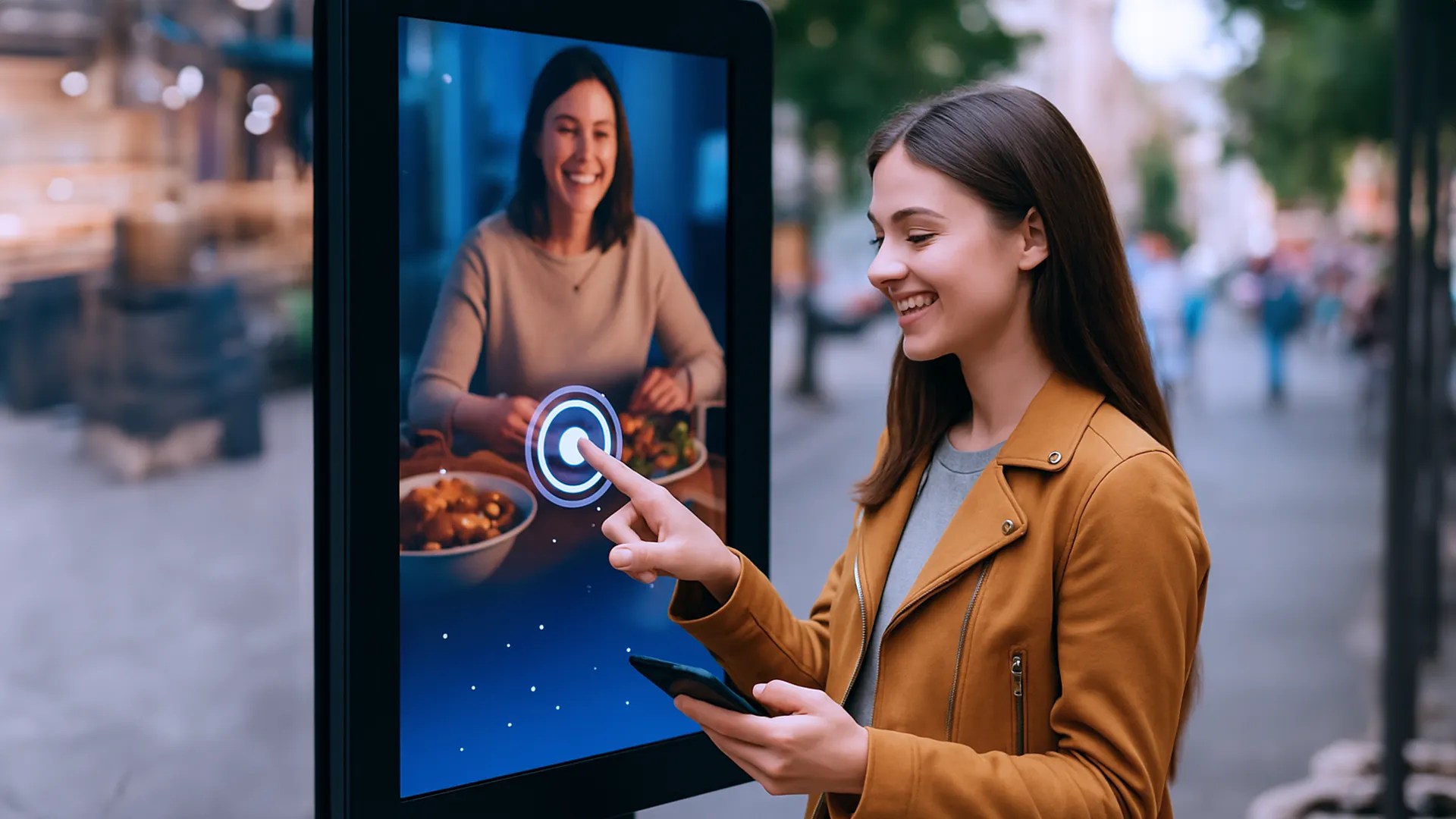
Interactive Billboards
Outdoor ads have begun to respond to people’s presence.
Women were shown one version of the ad, men saw a blank screen.
This demonstrated personalised targeting on the street.
Wearable-based Campaigns
Companies have also used data from wearables or fitness apps.
Nike let runners transform their FuelBand (fitness tracker) data into animated highlight videos on a branded site.
While not ads in the traditional sense, this shows how workout data can be turned into marketing content.
In the future, Nike or others could go further – imagine your running heart rate sending you a coupon for a smoothie after your run.
Presence Targeting Benefits
Presence targeting offers several advantages for businesses willing to experiment.
Relevance
First, it makes advertising very relevant and timely.
By tying messages to someone’s current situation, ads are more likely to catch attention.
In practice, this often boosts engagement: for instance, showing a lunch special to nearby workers during noon will likely get more clicks than a generic banner ad shown randomly.
Higher engagement usually means better leads & conversions.
Consumer Insights
Second, presence targeting provides rich customer insights.
Location and biometric data reveal patterns of behaviour and emotion that standard metrics miss.
By analysing where customers go and how they react, marketers can learn which products or messages truly resonate.
For example, tracking heart rate or galvanic skin response during focus groups tells researchers which features of an ad elicit excitement.
Personalisation
Third, presence targeting enables deeper personalisation.
When a marketer knows you’re physically nearby or just finished a workout, they can tailor offers specifically to that context.
This builds a feeling that the brand understands the customer.
For example, a retailer might greet a repeat visitor by name on in-store screens, or a fitness app might congratulate you with a discount voucher right after a big workout.
Presence Targeting Pitfalls
While promising, presence targeting comes with significant downsides and challenges.
Privacy
The foremost concern is privacy and consent.
Presence targeting relies on highly personal data.
Your exact location or even your bodily signals.
Biometric information like heart rate or facial expressions is considered extremely sensitive.
This means companies must obtain explicit consent before using it.
If they don’t, heavy penalties can follow.
Even with consent, many people are uneasy.
Getting people to sign up for location or health data sharing is a major hurdle.
Ethics
There are also ethical and reputational risks.
Collecting biometric signals for ads can feel creepy to customers.
Even if technically legal, it may erode trust.
A smiling face might get a happy ad, but if the camera misreads your expression or age, the result can be awkward.
If customers feel spied on, they may boycott a brand.
There is also the danger of data breaches
Complexity
From a business standpoint, presence targeting can be complex and costly to implement.
You need the right technology (beacons, sensors, wearable integrations) and robust data platforms.
Small business owners may find it daunting or expensive to set up geo-fence software or process continuous biometric streams.
Moreover, inaccurate data can waste money.
If a heart-rate sensor falsely thinks a person is stressed, it might send the wrong ad at the wrong time.
Similarly, location data isn’t 100% precise.
GPS can be off in outside of big cities, and ads might trigger when someone is just passing by but not interested.
What Does the Future Hold for Presence Targeting?

Looking ahead, presence targeting is likely to become more advanced as technology evolves.
We can expect smarter devices and AI to drive this trend.
For example, the growing integration of artificial intelligence with wearables and real-time data will deepen marketers’ ability to read biometric signals.
Smart glasses or AR headsets could one day recognise your heartbeat or eye movements and overlay ads or info in your view.
As IoT (Internet of Things) expands, even everyday objects might gather contextual data (imagine a billboard that knows it’s raining and shows a cafe promo).
Industry voices suggest this direction is almost inevitable.
Soon ads may respond dynamically to an individual’s mood or physiology.
By combining biometric indicators (heart rate, skin response) with location and browsing data, marketing platforms could know if you are ‘feeling happy, sad, excited’ and choose messages accordingly.
We may see more use of biometrics at big events, interactive shopping experiences, and perhaps in virtual reality or the Metaverse too.
However, the future will also see tighter privacy controls.
Regulations like GDPR already treat biometric and location data as sensitive.
We may see laws requiring even stricter consent (and clearer user controls) for presence-based ads.
Consumers are becoming more aware of data rights, so brands will need to emphasize transparency and value exchange.
Privacy-preserving technology (such as on-device processing or anonymised data) might become standard for presence targeting.
Key Takeaways
Presence targeting is an emerging frontier in digital marketing that aims to match ads with a customer’s physical or emotional ‘presence’ at the moment of contact.
By leveraging real-time location and even biometric data, marketers can make messages highly relevant.
Arriving exactly when and where the customer is most receptive.
This can boost engagement, conversion rates and customer satisfaction.
However, it also raises serious concerns.
Collecting heartbeats or tracking movements can feel intrusive, and in many regions it triggers strict privacy rules requiring explicit consent.
In the end, presence targeting can be powerful ‘heartbeat’ marketing, but only if it respects the customer’s own heart and privacy.
Use it wisely, and it may win hearts, use it carelessly, and it could lose them.
For more information on presence targeting, or help with your marketing needs, get in touch with us here at Neon Atlas.

 Neon Atlas Digital Marketing
Leave a comment