
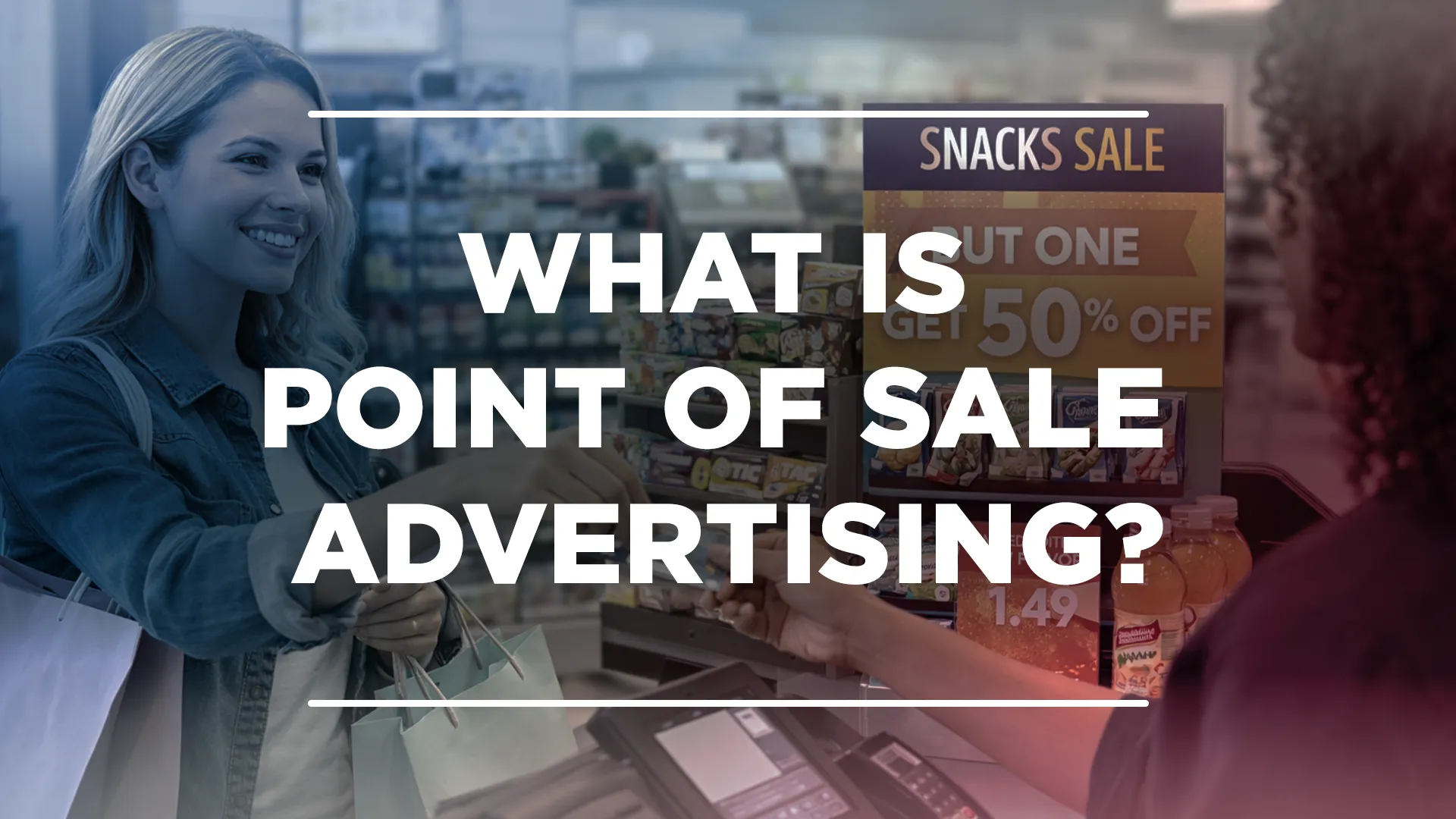
You’ve got a customer in your shop.
They’ve browsed, made a decision, and they’re just about to pay.
That final moment, when attention is high and the wallet’s already out, is one of the most overlooked opportunities in retail.
This is where point of sale advertising comes in.
Done well, it can increase average spend, shift seasonal stock, or introduce a new product with zero hard sell.
Key Takeaways
- Point of sale (POS) advertising targets shoppers at the final purchase point.
- A large share of in-store purchases are unplanned.
- Common POS ads include shelf-edge signs, checkout displays, posters, digital screens, samples and A-board pavement signs.
- Effective POS messages are clear, visually striking and well-branded.
- Simple setups can work for a low cost, fancier POS cost more but have higher impact.
- To judge success, track store footfall and conversion at the till, compare average transaction value and coupon or sample redemption rates.
- It boosts impulse sales, increases average sale value and reinforces branding right at purchase.
What is a Point of Sale?
A point of sale (POS) is simply where a customer completes a purchase.
In a physical shop, this is typically the checkout counter, cash register or payment terminal.
It’s the moment and location of the transaction.
Online, the equivalent POS could be the final payment page on a website.
For our purposes, POS refers to the in-store area where shoppers make payment and leave with goods.
This zone is critical, as it’s literally the last chance to influence a buying decision.
What is Point of Sale Advertising?

Point of sale advertising is the use of in-store marketing materials placed at or near the checkout (or other transaction points) to grab attention and prompt last-minute purchases.
It includes anything from posters, shelf-edge ‘wobblers’ and till displays to digital screens and product samplers that highlight deals or new products exactly when customers are paying.
For example, a brightly-coloured sign over a candy display at the till or a small countertop rack of travel-sized items counts as POS advertising.
The aim is to catch shoppers in shopping mode one final time.
Research shows customers expect some form of ad or offer as they pay, and are often open to impulse buys.
POS advertising harnesses the ‘first moment of truth’ – the second after purchase intent is decided but before the transaction is complete.
Examples of Point of Sale Advertising

POS advertising can take many forms.
Common examples include:
Shelf-edge Tags and Talkers
Small printed tags that clip to or hang from shelves near the checkout, often advertising promotions or new products.
These are cheap to produce and catch the eye as customers queue.
Countertop Displays
Table-top racks or bins placed on/next to the cash counter.
For instance, a freestanding display unit (FSDU) with snacks, batteries or small gadgets encourages impulse buys while customers wait.
Posters and Banners
Wall or hanging posters in the queue area showing promotions (e.g. ‘Buy 2 get 1 free’) or product highlights.
Large graphics can reinforce sales messages as people scan while waiting.
Floor Stickers or Banners
Decals on the floor guiding customers to featured products or drawing attention to a nearby display.
These are hard to miss and can be very low-cost.
Digital Screens
TVs or tablets at the counter running looped ads or product videos.
These catch attention with motion and can be updated easily, though they cost more in equipment.
Small shops might start with a tablet display.
A-frame / Pavement Signs
Outdoor sandwich boards and chalkboard signs at the shop entrance highlighting in-store deals.
These hook walk-in traffic before the sale.
Product Sampling & Demos
Staff offering free samples of food / drinks near the checkout.
For example, a bakery giving a taste of a new muffin flavor at the counter is a low-tech POS tactic that often leads to an extra sale.
Shelf-ready Packs
Products packed in display-ready boxes that can be placed directly on the shelf or countertop for a promotion.
5 Point of Sale Advertising Tips

Here are 5 tips to help your Point of Sale advertising:
Clarity and Branding
Make your message simple and bold.
Use high-contrast colours and large fonts so that shoppers can read at a glance.
Include your logo and a clear benefit, to maximise brand marketing.
Visual appeal is crucial.
Eye-catching displays draw attention and spur impulse buys.
Keep the offer clear and avoid cluttering the sign with too much text.
Strategic Placement
Position your POS ads in the busiest areas.
The most powerful spot is usually the checkout or queuing area, since customers are physically there.
End-of-aisle or entry displays also capture high traffic.
Test different locations to see what works best.
Timely Content
Update your displays regularly.
Remove or replace any outdated posters or expired promotions, or customers will ignore them.
Rotate products and messaging to keep repeat visitors engaged.
If you use digital signage, schedule fresh content.
Even on a budget, changing a shelf tag or chalkboard daily can make a big difference.
Leverage Offers and Cross-sells
Use POS adverts to promote deals and encourage add-ons.
For instance, a sign might highlight a discount if the customer adds a second item (‘2 for £5’).
Group complementary items together (e.g. batteries with electronic gadgets).
Sampling (free tastes or demos) is a tip many small retailers use to showcase products.
Bargain promotions generally work best at POS – shoppers in checkout mode are often looking for one more small deal.
Measure and Adapt
Track how well your POS ads are working.
Compare data from before and after implementation.
Useful metrics include store footfall, conversion rate at the till, average transaction value, and redemption rate of any coupons or codes used.
Point of Sale Advertising Benefits

Advertising at the point of sale offers several advantages, especially for small businesses:
Boosts Impulse Sales
POS ads tap into impulse buying.
According to industry studies, most in-store purchases are unplanned.
A well-placed sign or display at checkout can capture these impulse buys.
Increases Average Spend
By highlighting add-on items or promotions, POS marketing nudges customers to spend a little more each visit.
Even a small percentage increase in basket size adds up over time.
Cost-Effective Promotion
Compared to many other ads, POS materials are relatively cheap and targeted.
A DIY shelf talker or poster might cost only a few pounds to print, whereas it directly influences customers already in your store.
Unlike generic online ads, this reaches only actual shoppers, so there’s little wasted exposure.
Reinforces Branding and Offers
POS displays reinforce your brand and current promotions at a critical moment.
Consistent colors and logos on signs help make your store memorable.
They also remind customers of loyalty schemes or seasonal deals they may have missed, cementing promotions they’ve heard about elsewhere.
Measurable Impact
Unlike passive media, POS results can be tracked in real time.
By comparing sales data before and after putting up a display, you can calculate its lift on revenue.
For instance, if you see a clear uptick in lemonade sales during hot weather when a brightly-colored counter display was up, that confirms a positive impact.
This accountability is a big benefit for small shops that need to spend carefully.
Potential Point of Sale Advertising Risks
While powerful, POS advertising has its pitfalls:
Clutter and Overload
Too many signs and displays can overwhelm shoppers.
If aisles or counters become crowded with promos, customers may simply tune them out or feel the store is disorganized.
Keep displays neat and ensure they don’t block aisles or sight-lines.
Outdated or Misleading Information
Failing to update POS adverts can backfire.
An old price tag or expired offer can frustrate buyers and damage trust.
Any claims on signs must be accurate.
Ensure staff regularly check displays for correctness.
Initial Investment and Maintenance
Even though POS materials are relatively cheap, they require time and money to produce.
High-impact formats like digital screens or elaborate stands can be costly.
There’s also maintenance.
Printed materials can wear out or become untidy, and digital hardware needs power and updates.
Small shops must balance expense vs benefit.
Opportunity Cost
Space taken by one POS display means something else (or nothing) is not there.
A large endcap for one promotion might push another product out of view.
Choose the highest-impact products carefully to avoid losing sales elsewhere.
Customer Perception
Intrusive or aggressive POS tactics can annoy customers.
If shoppers feel ‘sold to’ too hard at checkout, it can leave a bad impression.
Focus on helpful messages rather than just pushing sales.
Regulatory Compliance
Generally, fixed POS signs in your own store are exempt from most advertising rules.
However, if your POS materials include competitions, coupons, or sample giveaways, make sure they follow legal guidelines.
Final Thoughts
For small businesses, point of sale advertising is a practical way to make every shopper count.
By placing the right messages and products right where customers pay, even a modest store can nudge visitors to add one more item or upgrade their purchase.
POS ads capture attention at the moment of truth, turning passive interest into real sales.
The key to success is doing it smartly.
Use clear, branded signs, position them strategically, offer genuine deals, and measure the results to see what works.
When executed well, a simple shelf sign or counter display can deliver a strong return on a small marketing spend.
POS advertising isn’t complicated or costly to start.
It’s about turning the final moments of shopping into a selling opportunity.
By following the tips and checklist above, even local shops and cafes can implement effective POS campaigns that boost sales and keep customers coming back.
For more information on point of sale advertising, or help with any of your marketing needs, get in contact with us here at Neon Atlas today.

Leave a Reply